
Meeting the Challenges of Returns (and Turning Them to Your Advantage)
Returns have always been a fact of life for retailers. Some have treated them as a selling point, others have tried to pretend they weren’t happening. Today, there are no two ways about it: returns must be taken seriously.
Jump to:
- How Online Shopping Has Changed Returns Behaviour
- Turning Refunds into Opportunites
- How to Profit from Returns
- Treat Returns with the Same Importance as Deliveries
- Turn Returns into a Competitive Advantage
How Online Shopping Has Changed Returns Behaviour
Online shopping has changed consumer behaviour. Shoppers expect the trust they invest by purchasing online to be reciprocated by a returns policy that gives them a quick, easy refund if they’re not happy with their purchase when it arrives. With some types of goods, notably fashion, shoppers are in the habit of buying numerous items with the intention of sending most of them back, just as they would if they were in-store taking items to the fitting room. The living room has become the new fitting room.
In a recent survey conducted by YouGov, 49% of UK shoppers had returned at least one item in the past year. And as shoppers become more attuned to sending items back, they become increasingly aware – and demanding – of the reverse logistics process.
Firstly, they expect returns to be free. Indeed, 72% of respondents in the YouGov research said that free returns are the most important feature of a returns policy, rising to 80% among those aged 55+. They also expect the process to be easy, citing factors such as length of return window, variety of available return channels and speed of refund as important influencing factors.
Turning Refunds into Opportunities
Such customer expectations may look like nothing but trouble for retailers, especially those without a returns policy fit for the modern retail landscape. But for those prepared to accept the challenge as part of their overall value proposition, a situation that could be written off as costly, time-consuming and complex to administer actually presents retailers with an opportunity to gain a competitive advantage, boost brand reputation, build stronger customer relationships and gather valuable marketing insight.
For example, by capturing information on the reasons for returns, you can identify recurring issues and take targeted action e.g. increased quality control or more descriptive size guides to begin to reduce returns volume over time. The graphic below shows the top reasons for returning goods over the past 12 months.
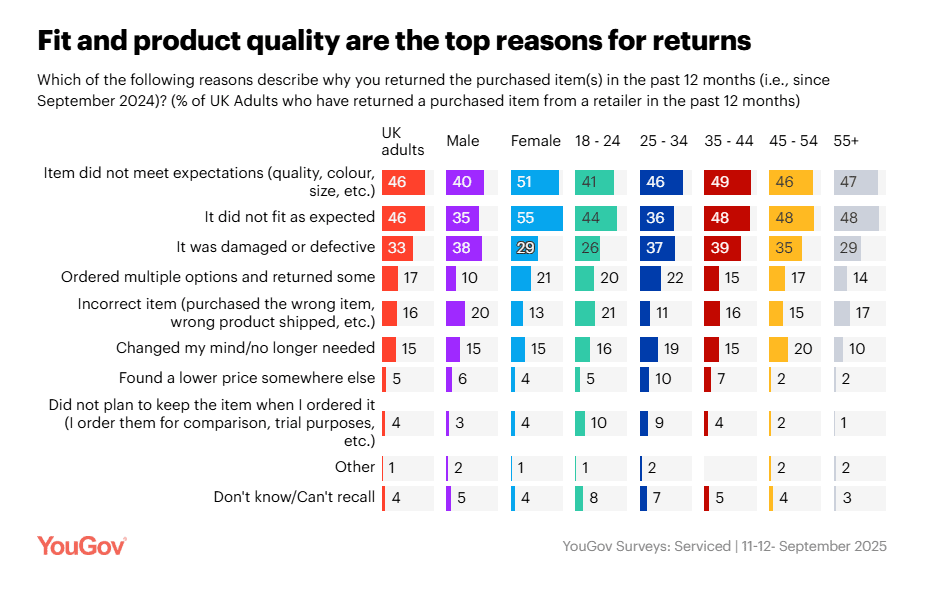
Source: YouGov
This gives some useful insight as to what you need to address to reduce your returns, eg you might want to look at why so many faulty items are going out. But within each retail category, there is the opportunity to drill down further.
With this sort of detail coming back with returned goods, you can create accurate portraits of each individual customer and use them to personalise your marketing and improve the fit and suitability of their future purchases.
How to Profit from Returns
Once you’ve accepted that returns are part of the bigger retail picture, there are several steps you need to take to make sure you’re giving customers what they want.
Cement your returns policy
A clear, well-resourced returns policy reduces confusion, lowers costs and builds trust at the point of purchase.
Being transparent about when and how you will accept returns is the foundation to putting in place a process that meets customer expectations and keeps costs to a minimum. Look at your competitors’ policies and those of retailers in other sectors to see where you might be able to deliver more. Build the returns policy into your business plan and make sure you are making the necessary allowances to resource it sufficiently.
Communicate clearly
As you’re now using your returns policy as a selling point, it’s important that you communicate it clearly to your customers.
With 51% of adults saying that returns policies influenced their decision to buy from a retailer, it’s key they can find it easily in the first place. The more they have to go looking for it, the more likely they are to give up and shop elsewhere. Communication is very important throughout the sale and return journey as a whole. You need to make sure that every link in your reverse logistics supply chain is properly informed of its role, while customers want clear guidance about which returns label to use, they want to be able to track their return and they want to be notified of a refund once their item has been returned.
Facilitate returns efficiently
With goods coming in from diverse and unpredictable sources, then needing to be sorted, assessed, prepared for disposal or resale, and refunded, reverse logistics are a lot more complex than the supply stream and need to be resourced accordingly. A third party logistics partner who can demonstrate experience and expertise in handling returns can be a major asset in this respect. As well as handling the receipt of goods returned to the warehouse and all that that entails, they can make sure every transaction is updated on your system and offer advice on making the process easier for your customers.
According to the National Retail Federation, 71% of shoppers would be less likely to shop with a retailer again following a difficult returns experience. They want options when it comes to returns, that could include downloadable labels sent by email, options to drop at a store or locker, resealable packaging and the ability to track their returns because they feel reassured by having evidence that they have sent the item back.
Use the data to improve your service
Returns present a valuable opportunity to gather customer feedback. When a customer buys from you and is happy with what they receive, you may never hear from them again. But with returns, customers are actively extending their relationship with retailers and you can use this to gather insight about their preferences. Knowing what items they return and why will enable you to build a more accurate picture of each customer, allowing you to personalise your marketing and hone your offer. This should help to reduce the need for returns in the long term. So make sure you include some sort of data gathering mechanism in your returns process.
Treat Returns with the Same Importance as Deliveries
Consumers have become accustomed to using free returns services as part of their whole buying process and, with online shopping, they judge a brand as much on the quality of its returns experience as on the quality of its goods and deliveries. The ingredients of a successful returns policy can be summed up in 5 points:
- Make it free
- Make it easy
- Make it quick
- Communicate it clearly
- Use the feedback to improve
A return is the final touchpoint between customer and brand in the retail journey and so leaves the longest lasting impression. Get it wrong and you could lose a customer for life; get it right and they’ll come back to you time after time.
Turn Returns into a Competitive Advantage
Returns are no longer just an operational necessity, they’re a powerful opportunity to strengthen customer loyalty, protect margins, and improve the overall retail experience. With the right strategy, technology, and 3PL partner in place, retailers can transform returns from a cost burden into a source of insight and long-term growth.
Enquire now to find out how we can help simplify your returns to reduce costs and increase customer retention.
Contact Us

Written by Luke Mallett
With a background in ILG’s fulfilment and delivery customer service teams, Luke brings an experienced, customer-oriented approach to his current business development role. He started out with ILG in 2023, and today his remit within our UK sales team focuses on bringing on board new fulfilment customers and initiating partnerships that bring long-term commercial success, both for our customers and ILG.
More insights >

Caia Cosmetics Partners with ILG to Power UK Expansion
Discover how ILG supports CAIA Cosmetics’ UK expansion with specialist beauty fulfilment, e-commerce logistics, storage and carrier management.

Top Social Commerce Tips to Boost Peak Sales
Discover the social commerce strategies that drive Peak Season sales. Read our practical tips for growing, founder-led brands.