
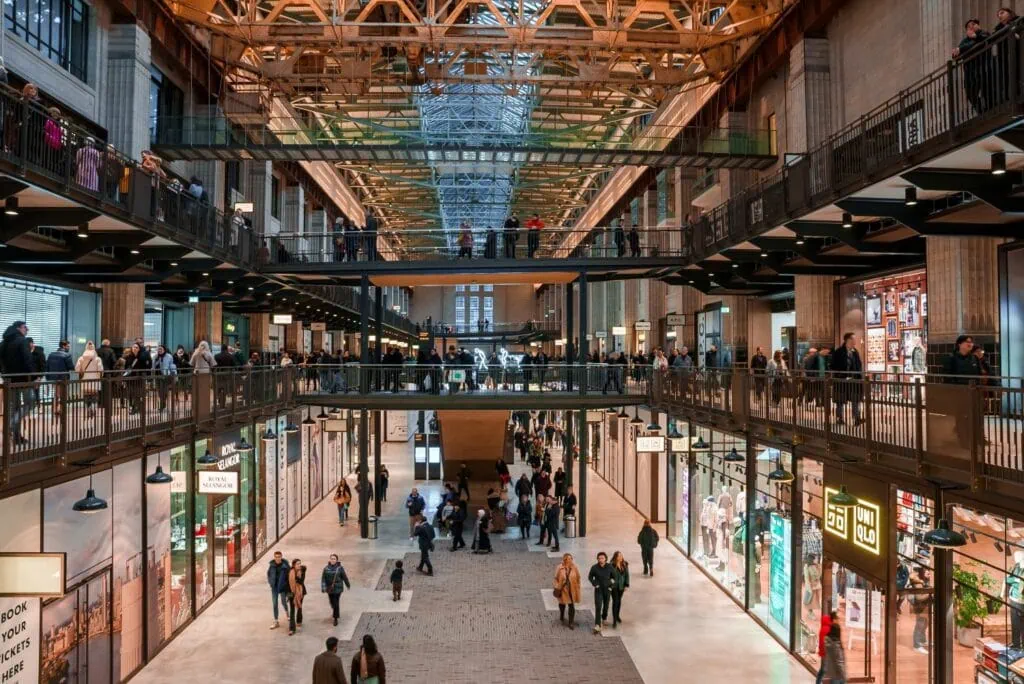
Expanding Market Presence with Multichannel Retailing
There are so many online marketplaces out there these days that it can be hard to choose the best one for your e-commerce business. But the good news is that there’s nothing stopping you from putting all your eggs in one basket.
As long as it’s right for your business, you can sell through as many platforms and channels as you want. And if you still want to sell through a physical store, through social media, or even over the phone, that’s fine, too. This is called multichannel retailing, and it can make a real difference to your success and profitability: according to Harvard Business Review, 73% of customers use more than one channel during their shopping journey, so giving them more options gives you more opportunities to sell.
Multichannel retailing can be tricky to manage, as the complexity and amount of admin involved increases as you add more channels. But with the right strategy and support in place, you can make your e-commerce operation more efficient, more flexible and better-equipped to scale upwards in the future. This guide to multichannel retailing tells you all you need to know, including how it influences delivery and fulfilment.
Jump to:
- What is Multichannel Retailing?
- What are the Benefits of Multichannel Retailing for E-Commerce Businesses?
- How Does Multichannel Retailing Influence Fulfilment?
- Why Centralised Management for Multichannel Retailing is Essential
- How a 3PL Can Help with Multichannel Retailing
- FAQs
What is Multichannel Retailing?
Multichannel retailing refers to the practice of selling goods and services on more than one channel at the same time. These channels can be digital or physical in nature, and can be of any number or combination.
Typical channels used by a multichannel retailing enterprise can include (and are by no means limited to):
- Direct-to-customer websites, e-commerce platforms and mobile apps
- Online marketplaces or retailers (such as Amazon, eBay, ASOS or Beauty Bay)
- Social commerce (including TikTok Shop, Instagram Shop and Facebook Marketplace)
- Physical stores, pop-up shops and event stands
- Telephone and mail orders (less common today but still of value to some organisations)
- TV shopping (channels such as QVC or TJC)
What’s the difference between multichannel retailing and omnichannel retailing?
Omnichannel retailing and multichannel retailing are often confused, so it’s important to distinguish between them. Multichannel means that there are several different sales channels that all operate separately from one another, while omnichannel integrates the channels more closely across operations, data, insights, inventory and marketing.
For large-scale retail operations, omnichannel strategies make sense as they have the resources to tie different elements and channels together. If you’re a smaller e-commerce operation, however, a multichannel strategy will perfectly serve your needs while you grow your business.
What are the Benefits of Multichannel Retailing for
E-Commerce Businesses?
If you can get your multichannel retailing strategy right, then the benefits for your e-commerce business can be transformative, as you can tap into multiple sources of revenue rather than just one. In practice, this can deliver:
A bigger potential customer base
Not every customer uses every platform or retail channel available to them, which means operating across multiple channels widens your customer base substantially. This is especially the case if you want to sell internationally, as some platforms will give you global reach that you may not have at present. Research has found that multichannel businesses can generate 190% more revenue than those relying on a single channel.
Greater customer choice, convenience and satisfaction
Of course, many shoppers will browse and buy across different platforms, as they like to shop around to get the best deal. They’ll also have their own personal preferences around the platforms they like to buy from. Operating across several channels simultaneously allows you to connect with more customers on their terms, and improve their buying experience by offering goods through the channels that they’re most comfortable with. It also offers greater levels of convenience for your customers, if they don’t have time for an online order to arrive, being able to pop into a department store or store of your own to pick up what they need means you make the sale you might have missed out on otherwise.
Easier to avoid risk and difficulty
At the top of this guide, we mentioned how single-channel retail often means putting all your eggs in one basket. If that channel lets you down for some reason – for example, a downturn of consumer interest, or platform downtime – then your entire ability to sell is completely cut off. If you have multiple channels available, then problems with one of them can be easily mitigated by focusing on the others, therefore minimising the impact on your cashflow and profitability.
Flexibility and scalability
As your business grows, you’ll want to explore new options to reach more customers, increase sales and sell a wider range of products. Adopting more channels gives you the perfect opportunity to do that, as you can push past the limit of what you can do with one channel, and drive new sales and opportunities. It also gives you more flexibility to adapt quickly to new developments, from changing consumer preferences to new fashions and trends.
How Does Multichannel Retailing Influence Fulfilment?
When you’re operating across multiple sales channels, things can get more complicated from a shipping and fulfilment standpoint, compared to a single-channel operation where the same processes are applied to every sale and item. In particular, you’ll need to watch out for:
Differing channel terms
Every platform you operate on and channel you sell through will have its own requirements and terms, usually laid out in Service Level Agreements (SLAs) or Vendor Manuals. These will set out the expected standards for delivery timeframes, providing customer support, handling returns, listing items and other key processes. This means (for example) that you could be selling exactly the same item on Amazon and your own e-commerce website at the same time, but you’ll be required to deliver one of them through a much faster and costlier delivery method than the other.
More complex inventory and shipping processes
When selling across multiple platforms at the same time, you’ll need to keep a very close eye on your inventory levels. For example, if you sell out of a particular item, then it’ll need to be marked as ‘sold out’ across all of your channels immediately. If you don’t, then customers might start placing orders for items you don’t have in stock, which can lead to customer frustration due to longer delivery times than expected.
Larger management and admin demands
Dealing with the above can consume a lot of time, skills and resources, which can often be a real burden on smaller e-commerce businesses. The ever-increasing expectations of the global consumer often add to this pressure, as they demand seamless, professional, consistent experiences across all channels. Qualtrics analysis has found that 53% of customers who receive a poor experience either reduce their spending with that business, or stop buying from them altogether.
Why Centralised Management for Multichannel Retailing is Essential
The best way to deal with all these complications is to centralise the management of multichannel retailing into a single service or platform. This is where all orders are received at the same point, no matter which channel they came from, and then different processes and procedures are applied, depending on that ‘source’ channel. This centralisation can help your business benefit from:
Simplified, streamlined inventory management
When all orders are received and processed in one place, managing them all becomes a much simpler endeavour. In particular, the tracking of stock and inventory levels becomes much clearer, and any stockouts can be dealt with immediately across all platforms. Instead of different inventory levels being kept for different channels, each product can have a single ‘pooled’ inventory that covers all the channels on which it’s sold.
Faster, more cost-effective processes
When you have one large inventory rather than several smaller ones, goods can be ordered in from suppliers in larger quantities, which can be more cost-effective thanks to bulk purchasing discounts and a reduced number of incoming shipments. And when orders come in for processing, the use of a more consistent and coordinated system can help speed things up, as everyone can access all the information they need from a single point of contact.
Lower risk of errors and customer dissatisfaction
Sending all orders through the same centralised system reduces the risk of mistakes being made, especially with the help of technology. Comprehensive data attached to each and every order can ensure that the right items are picked and packed at the right time, sent to the right customers with the right carriers, and meet all the relevant SLA requirements of this platform. This helps maintain high rates of customer satisfaction at a time when it’s never been easier to shop around.
Greater brand consistency
A good multichannel e-commerce business will have a strong brand that people easily recognise across different channels. Consistency is a huge part of making this possible, and a centralised system enables that by ensuring that customers get the same shopping experience, no matter which channels they prefer to buy from. If it’s easy for them to purchase and pay, and they receive their goods when they expect them, they’ll be more likely to return and buy from you again in the future.
Wider shipping and delivery options
Having access to multiple platforms and SLAs also gives you – and your customers – access to a wider range of shipping and delivery options. These can vary according to delivery time, cost, carrier, and insurance cover for items that are especially fragile or valuable. But in turn, it allows both parties to lean towards the shipping choices that work for them, whether you want to maximise your profit, or they want to get their goods as quickly as possible.
Accessible customer and inventory insights
All the data generated by e-commerce can be used to learn more about what people buy, when they buy it, where they come from, and how these trends evolve over time. These insights are crucial to inform your future strategy across stock procurement, marketing and choice of retail channel. When different channels operate separately, it’s very difficult to get these coordinated insights, but a centralised system naturally brings all this data together for easier analysis and reporting.
How a 3PL Can Help with Multichannel Retailing
Multichannel retailing can be complicated. Not only does it require the use of technology, but it also demands skills and expertise across inventory, shipping and fulfilment, and resources like warehouse capacity to handle constantly fluctuating levels of stock and demand.
You may feel that this administrative burden is too much for your current e-commerce operation, on top of all the other things you have to deal with day-to-day. And it’s in this situation where working with a third-party logistics (3PL) provider can make a real difference.
With an expert professional team, experienced with fulfilment across every major retail channel, they’ll be able to simplify the management of your inventory and shipping, however big your business and however many channels you operate in. They’ll also be able to advise you on any strategic changes you can make to maximise the cost efficiency of your fulfilment. To find out more on transforming your multichannel retailing future, talk to the ILG team today or explore our fulfilment and logistics services.
FAQs
Is this the same as Amazon Multichannel Fulfilment?
No. Amazon MCF is simply their brand name for a particular service that they offer. For your own multichannel retailing strategy, you have complete choice over which channels you want to trade on, how you want to manage them, and which expert partners and providers you want to work with.
Do I need to be a large-scale operation to use multichannel retailing?
E-commerce businesses big and small can benefit from adopting a multichannel retailing strategy. Indeed, many smaller operations find that working with a 3PL provider is especially helpful, as it means they can easily grow and scale their businesses without being held back by limited warehouse capacity or a lack of time for admin.
Contact Us

Written by Danny Ellard
Joined ILG in 2020 at a time of intensive growth and progressed quickly to lead our UK Sales Team. As well as shaping ILG’s business development strategy for the UK, Danny is hard at work winning new business, tackling ambitious growth targets and strengthening relationships with customers, both new and established. Danny takes a super-collaborative approach to building our forward-thinking fulfilment proposition by engaging closely with ILG’s Leadership, Operations and Marketing teams.
More insights >
What Does a 3PL Cost in the UK? A Pricing Breakdown for Growing Brands
Every 3PL structures its quote differently, which is exactly why comparing fulfilment pricing is so frustrating. We break down the real cost components, what pushes them up or down, and what a premium operation adds that a commodity 3PL doesn’t.

How to choose a 3PL in the UK
Choosing a 3PL shapes your delivery accuracy, return rates and ability to scale, so it’s worth getting right before the sales calls begin. Here are the criteria experienced operators actually weigh up, plus the red flags and questions to ask before you sign.