

UK Omnichannel Retail in 2026
Growth Isn’t the Problem. Running It Is.
The operational reality behind scaling e-commerce brands
There is a moment most e-commerce founders recognise. Orders are coming in. Sales are climbing. The brand is starting to attract real attention. From the outside everything looks like a tidy little success but from the inside, however, it can feel like something else entirely.
Inventory suddenly needs to be tracked across several sales channels that all believe themselves to be the most important. Returns begin arriving with impressive regularity. Carriers introduce new rules, new surcharges and new delivery options with the kind of enthusiasm normally reserved for airline baggage policies. Systems that once worked perfectly well together suddenly develop the relationship dynamics of estranged cousins.
And somewhere along the way it dawns on you that running an e-commerce brand increasingly involves operating something that looks suspiciously like a logistics network.
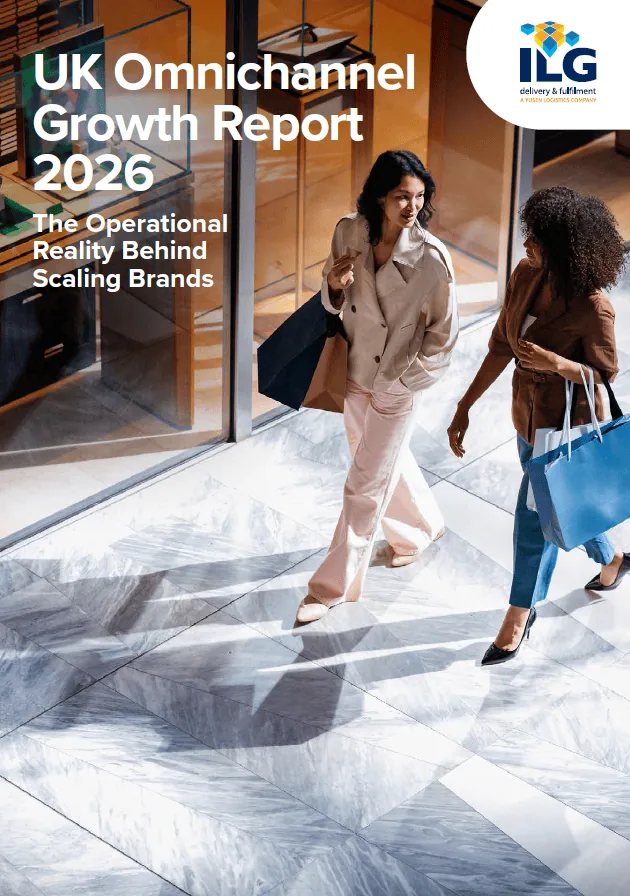
That gap between the perception of e-commerce and the operational reality behind it is exactly what we set out to explore in the The UK Omnichannel Growth Report 2026. We surveyed 328 senior leaders across UK retail brands to understand what scaling actually looks like. What we found is remarkably consistent.
Growth itself isn’t the difficult part. Running a business that is growing, on the other hand, is where things get interesting.
Why retail leaders say operations are now the biggest barrier to growth
For years the conversation around e-commerce focused on marketing such as customer acquisition costs, paid media performance and the latest platform promising to unlock a new wave of growth if you simply adjusted your ad targeting and believed hard enough.
Yet when retail leaders were asked what genuinely slows their businesses down today, the answers looked rather different.
The two biggest barriers to growth were rising business costs and rising fulfilment and delivery costs. Customer acquisition, once the central obsession of e-commerce strategy, was mentioned by only a small minority of respondents. This shift says something important about where the industry has arrived.
In fact, the report found that 54% of retail leaders cite rising business costs as their biggest barrier to growth and 53% cite fulfilment and delivery costs, compared with just 10% who say customer acquisition costs are the main constraint on their business.
Many brands have already solved the demand problem. They have audiences, channels and customers ready to buy. The challenge now lies in building operations capable of supporting that demand without quietly eroding the margin underneath it.
How omnichannel retail has transformed e-commerce operations
A decade ago, an e-commerce business could realistically operate through one primary channel – its website.
Today that same brand may be selling through its own DTC website, marketplaces such as Amazon or Etsy, social commerce platforms like TikTok Shop, wholesale partners and even physical retail spaces or pop-up shops.
Each channel arrives with its own expectations. Delivery promises differ. Packaging requirements change. Inventory must be allocated across different locations and sales channels, often at impressive speed. Returns arrive through multiple routes.
What once looked like a fairly straightforward e-commerce setup gradually evolves into something closer to a complex operational ecosystem.
Attracting customers is still important, of course.
Serving them well is where the real engineering now sits.
The operational pressure points scaling e-commerce brands face
As brands move from early growth to genuine scale, certain operational challenges appear with almost reassuring predictability.
One of the most common is data fragmentation.
E-commerce platforms, warehouse management software and fulfilment technology, marketplaces and managed multi-carrier delivery services all generate valuable information, Unfortunately, they rarely speak the same language. Creating a single, reliable view of inventory and operations can become far more complicated than expected.
Returns create another hidden strain.
In sectors such as fashion and beauty, return rates can be high enough to significantly affect profitability. The cost rarely sits in the returned item alone. It appears in the inspection, repackaging and reintegration of stock, along with the warehouse space and labour required to process it efficiently.
In fashion, return rates can range from 30% to 50%, creating significant operational pressure on fulfilment operations as well as margins.
International expansion adds another layer of complexity. Many UK brands now expand into overseas markets earlier than they once did, which introduces new customs processes, duty considerations such as the EU de minimis removal and the inevitable challenges of cross-border returns. Ambition travels quickly, yet, operational infrastructure often needs time to catch up.
Why e-commerce fulfilment and 3PL partners are a strategic advantage
All of this has quietly elevated the importance of e-commerce fulfilment within the retail business.
A decade ago fulfilment was largely viewed as storage and pick-and-pack. Today it plays a far more strategic role in enabling growth. Modern fulfilment operations are expected to support multicarrier delivery networks, international shipping, returns management, inventory visibility and increasingly sophisticated automation. All of this must work seamlessly across multiple channels and markets.
More than half of the retail leaders surveyed also said faster and more flexible delivery options will be a priority investment over the next 12 months, highlighting how central fulfilment has become to competitive retail strategy.
This is one reason many brands are rethinking whether fulfilment should be run entirely in-house.
Working with a 3PL fulfilment partner allows scaling e-commerce brands to access infrastructure, systems and operational expertise that would otherwise take years to build internally.
For founders, the appeal is often refreshingly straightforward. Time spent negotiating carrier contracts, managing warehouse space and resolving delivery issues is time not spent developing products or strengthening the brand itself.
One founder described the impact succinctly. Moving to a fulfilment partner meant they could ‘park a problem that used to be there’ and return their focus to customers.
The brands that scale best have strong operational foundations
Retail is definitely NOT slowing down.
Consumers still expect fast delivery, reliable, transparent tracking and easy returns. If anything, expectations continue to rise as e-commerce becomes the default shopping experience. What has changed is the weight of the infrastructure required to support those expectations.
Behind every smooth online order sits a network of systems, warehouses and delivery partners that must operate with precision. When those systems align, growth feels manageable. When they do not, even successful brands can find themselves spending more time fixing operational issues than building the future of the business.
The retailers that scale most effectively today are rarely those with the loudest marketing.
They are the ones whose operational foundations are strong enough to carry their ambition.
Download the UK Omnichannel Growth Report 2026
The UK Omnichannel Growth Report 2026 explores how UK brands are managing this new operational reality, including:
• the biggest barriers to growth facing retail leaders
• the rising complexity of e-commerce fulfilment
• how brands are managing returns and international expansion
• why operational resilience is becoming a competitive advantage

Written by Elysia Mitchell
Responsible for all written content across ILG’s UK and US websites, Elysia also plays a central role in co-ordinating our partner outreach events. She joined ILG in 2018 on a graduate placement scheme as a Marketing Assistant and continues to support our sales and marketing teams in their drive to win new customers and grow our brand recognition. Elysia’s passion and knowledge of the UK beauty industry helps to keep our marketing to beauty and wellbeing audiences on-trend and on-message.
More insights >
TikTok Shop is Exploding. Can Your Fulfilment Keep Up?
TikTok Shop can be a powerful growth channel but you need the right operational foundations in place. Find out how we deliver TikTok Shop fulfilment to help brands grow.
Shipping Fragile Items: Best Practices to Reduce Breakage During Fulfilment
Learn how to protect fragile items in transit with expert tips on packaging and choosing the right courier with our best practice guide to shipping fragile items.